
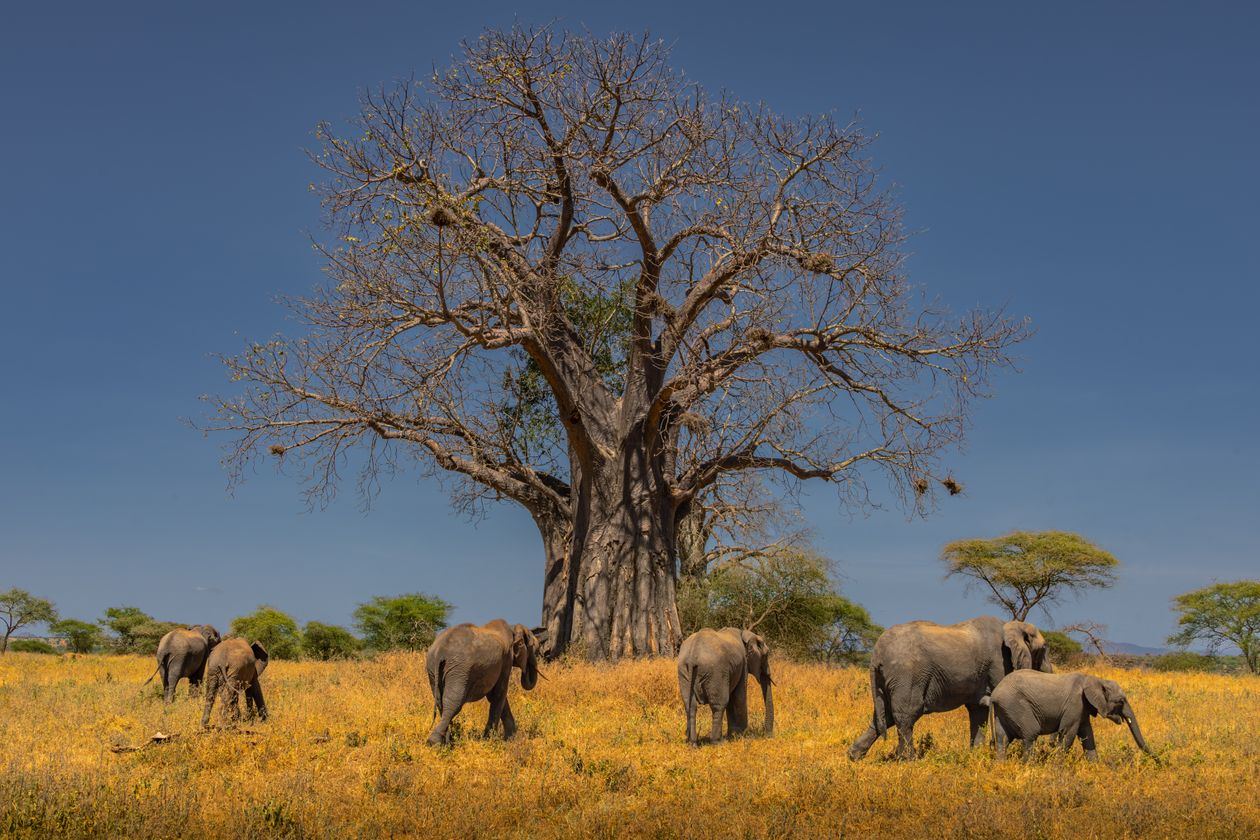
A Tarangire National Park safari delivers something the Serengeti cannot: Tanzania's greatest concentration of elephants, gathered along a single permanent river in a landscape of ancient baobab trees that can be 500 to 900 years old. The park covers 2,850 km² in northern Tanzania's Manyara Region, sits about two hours from Arusha, and from June through October becomes one of the most productive wildlife areas on the continent as the surrounding savanna dries and animals converge on the Tarangire River. Outside of peak dry season, it is quieter, greener, and one of the best birding destinations in the northern circuit.
What Makes Tarangire Stand Apart
Every major park in the northern Tanzania circuit has a defining feature. The Serengeti has the Great Migration and its exceptional big-cat density. Ngorongoro Crater works because the natural bowl concentrates wildlife year-round. Tarangire's defining feature is the Tarangire River, the only permanent water source across a broad stretch of northern Tanzania.
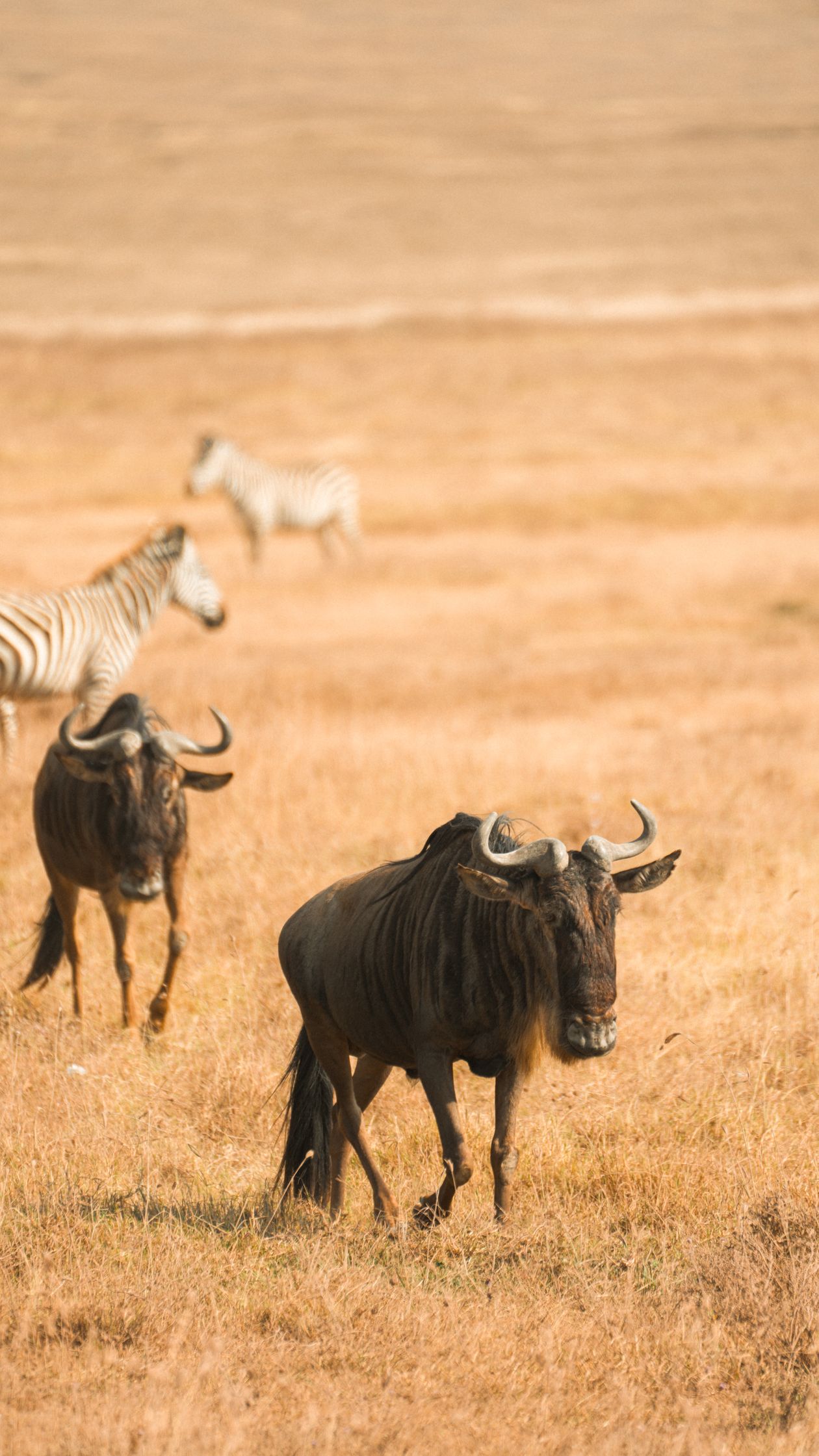
As the dry season takes hold from June onward, water disappears from the Maasai Steppe and the Simanjiro Plains to the east. Wildlife has to move, and it moves toward the river. Safari guides call this Tarangire's "mini migration": roughly 250,000 animals, including wildebeest, zebra, and buffalo, enter the park from surrounding areas during the dry months. This is not a migration in the Serengeti sense, with defined herds and dramatic river crossings. It is a mass convergence driven purely by water scarcity, and it turns Tarangire into one of the densest wildlife areas in East Africa from July through October.
The landscape adds a character that most visitors don't anticipate. Tarangire is hillier and more textured than the Serengeti, with riverine woodland along the water, the Silale Swamp providing year-round water in the south, and open central grasslands that transition into baobab-covered hillsides. The park's baobabs are ancient, many between 500 and 900 years old, with trunks that can reach 10 meters in diameter. If you have spent time in the Serengeti, Tarangire will feel immediately different: more enclosed in places, quieter on the tracks, and defined by water and swamp rather than by open horizon.
Tarangire Wildlife: What You Can Expect to See
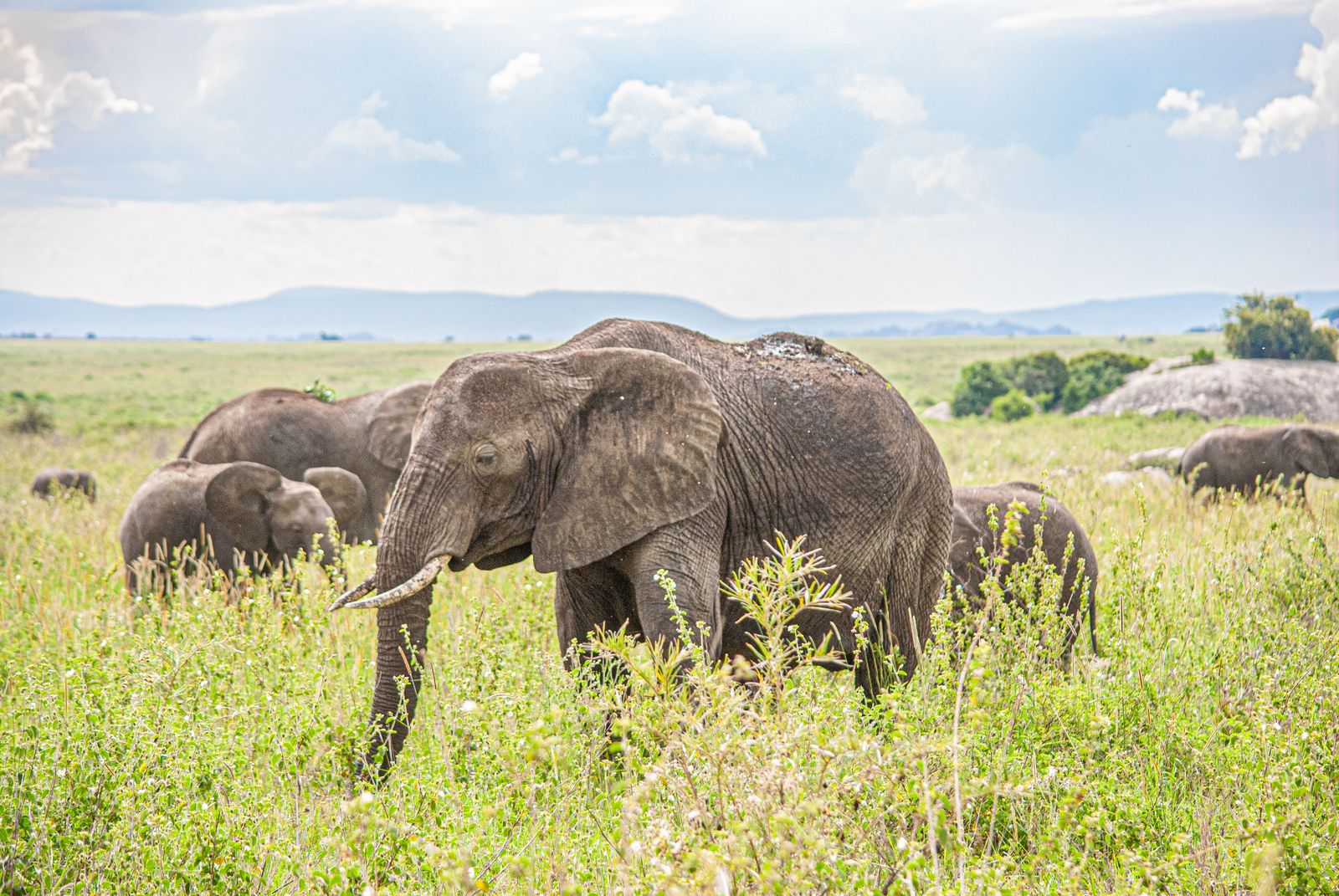
Tarangire is Tanzania's elephant park, and that reputation is fully justified. The resident elephant population is estimated at around 3,000 individuals, and during the dry season, gatherings along the Tarangire River regularly bring herds of 100 or more together at the water. You will see elephants on almost every game drive here, regardless of season, but from July through October the encounters are in a different category: large family groups drinking and dust-bathing, calves playing in the mud, bulls interacting along the banks. The park holds a documented scientific record: it is where the oldest known African elephant to give birth to twins was recorded.
Giraffe, impala, eland, oryx, lesser kudu, and waterbuck are year-round residents. The dry-season influx of wildebeest and zebra from the Simanjiro Plains adds significant numbers from June through October, so the park's mammal diversity during high season is broader than most visitors expect. African rock pythons are a genuine sighting in sausage trees and acacia woodland, and monitor lizards are common near the river. Tarangire also has one of the more reliable populations of gerenuk in northern Tanzania, the long-necked antelope that browses upright on its hind legs in the drier eastern areas of the park.
For birding, Tarangire is exceptional. The park lists more than 550 recorded species, which is more than the Serengeti, including six near-endemic species not reliably found anywhere else in Tanzania. Raptors, hornbills, ground hornbills, lilac-breasted rollers, and the large wading birds around the Silale Swamp are particular highlights. November through April, when migratory species arrive from Europe and Central Asia, is the best window for birding, though the resident bird population is rewarding year-round.
Predators in Tarangire National Park
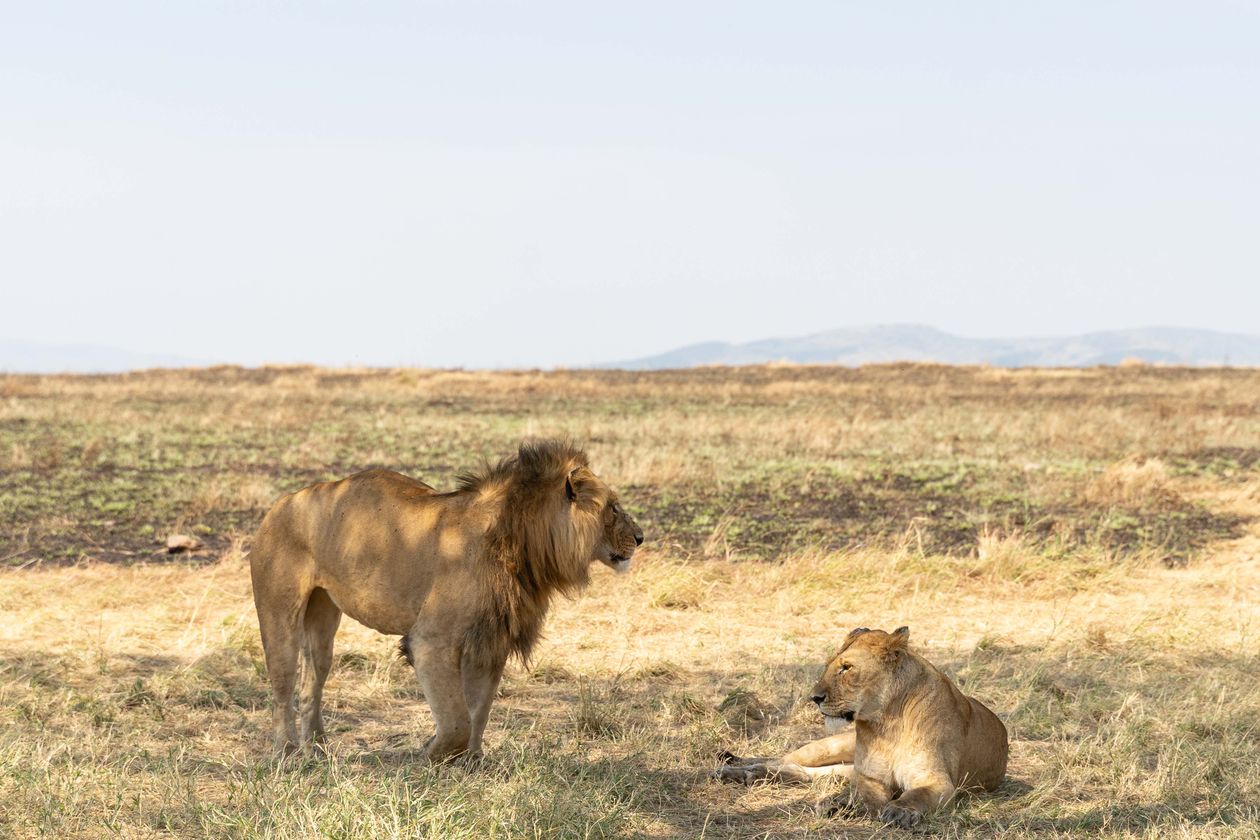
Lions are the most consistently seen large predator in Tarangire and occasionally climb trees, similar to the famous tree-climbing lions of nearby Lake Manyara. This behavior is worth watching for in the acacia and sausage tree woodland along the river. Leopards are present in the park and often rest in sausage trees during the heat of the day, though they're harder to locate consistently here than in the Serengeti. Cheetahs are found mainly in the open southern areas of Tarangire and are most visible during the early morning hours when they're hunting across open ground.
Tarangire also holds a significant African wild dog population, which makes it one of the more productive northern Tanzania parks for spotting this rare carnivore. Wild dogs are most reliably seen during the denning season from May through July, when packs stay in a fixed area to raise pups and can be tracked over multiple days. Spotted hyena, serval, and caracal round out the predator list, and honey badger sightings near the river are not unusual.
Best Time for a Tarangire National Park Safari
The dry season from June to October is the best time for a Tarangire safari by any measure that matters to most visitors. As the surrounding landscape dries, the Tarangire River increasingly becomes the only reliable water source in the area, and wildlife concentrations build from June through October. The first two weeks of October often deliver the park at its peak: the Silale Swamp and the river are essentially the only water sources left, the density of elephant and buffalo is extraordinary, and predators operate at close range around predictable prey.
July through September is high season. Game viewing is consistently strong throughout this window, and most operators run their main Tarangire programs here. Prices reflect the demand, but Tarangire still carries fewer vehicles than the Serengeti during the same period, which gives game drives a noticeably quieter feel. If you're visiting Tanzania in peak season and want a park that delivers comparable wildlife density with less traffic, Tarangire is the right choice.
November and December bring the short rains. Wildlife remains good in early November, with elephant sightings still reliable as herds haven't fully dispersed. By late December, water starts appearing across the wider ecosystem and animals spread out more. Prices and visitor numbers drop below peak season, and the landscape transitions from dry gold to green, which many photographers prefer for the contrast and the softer light.
January and February are underrated months. The park is green, the light is softer than in the dry-season haze, and migratory bird species are present in numbers. Elephants remain in the park year-round, so sightings continue throughout, just spread across more ground than in the dry season. Visitor numbers and safari prices fall significantly from January onward, which makes this period good value for travelers whose schedules allow some flexibility.
March through mid-May is the long rains period. The park stays open, but some southern tracks become difficult after heavy rain, and many safari itineraries reduce or skip Tarangire during this window. Wildlife disperses across the whole ecosystem rather than concentrating at the river, which makes game drives less predictable. For a broader look at how this fits into the full Tanzania safari calendar across all the northern parks, the best time to visit Tanzania for safari guide covers every month in detail.
Getting to Tarangire from Arusha
Tarangire is the most accessible park in the northern circuit. The main Engelhard Gate is roughly 120 km from Arusha, about a two-hour drive on paved road via the town of Makuyuni. Most safari vehicles cover the route in under two hours year-round, with no significant off-road travel needed to reach the park entrance. Kilimanjaro International Airport (JRO), where most international visitors arrive, is also about two hours from the gate, making Tarangire a natural first or last stop on any northern circuit itinerary.
There is a small airstrip inside the park for light aircraft if you're flying between parks on a fly-in safari, though most visitors arrive by road since the drive is short and the road is reliable in all seasons. Park entrance fees for 2025 to 2026 are $50 per adult per day for non-resident visitors. Children aged 5 to 15 pay $15 per day. TANAPA accepts Visa and Mastercard at the gate, so you don't need to carry cash for entry fees.
How Many Days to Spend in Tarangire
One full day gives you enough time to drive the river road, explore the central plateau, and cover the main habitats. For most visitors on a northern circuit of five to seven days, one day in Tarangire is the standard allocation, and it is enough to understand what the park offers. You'll almost certainly see elephants, likely encounter giraffe and impala in good numbers, and cover the main circuit without feeling rushed.
Two days is the better choice if elephants or wild dogs are a priority, or if you want to reach the southern Silale Swamp. The swamp takes the better part of a morning to reach from the main gate, but it holds permanent water and regularly delivers extraordinary dry-season wildlife concentrations. Wild dog sightings are also more likely in the south than along the main river road. If you're working out how to distribute days across the full northern circuit, the Tanzania safari days guide walks through the options at different trip lengths.
Fitting Tarangire into Your Northern Circuit
Tarangire works best as either the opening or closing park on a northern circuit because it sits closest to Arusha and Kilimanjaro airport. Starting there means your first full game drive happens the day you arrive in Tanzania, with no long overland transfer eating into your time. Ending there gives you a strong wildlife day before flying home, with a short drive back to the airport afterward.
The most common routing combines Tarangire with the Serengeti, Ngorongoro Crater, and sometimes Lake Manyara. A 6-day Tanzania safari itinerary typically opens in Tarangire on day one from Arusha, moves through the central Serengeti for days two through four, covers Ngorongoro Crater on day five, and returns to Arusha on day six. This routing uses Tarangire's proximity to the airport efficiently rather than requiring a backtrack at the end of the circuit.
If you've already worked through the Serengeti vs. Ngorongoro question, Tarangire fits naturally as the opener. The park is different enough in habitat, wildlife, and landscape that it doesn't overlap with either of those parks. Adding it as day one gives your safari an elephant-centered, baobab-rich introduction before you move on to the open plains and crater wildlife that define the rest of the circuit.
Tarangire National Park Safari: Frequently Asked Questions
Is Tarangire National Park worth visiting?
Yes, and for most northern circuit itineraries it's worth including even if you can only allocate one day. Tarangire offers something genuinely different from the Serengeti and Ngorongoro: a more intimate scale, fewer vehicles, extraordinary elephant encounters, and a baobab-dominated landscape that sets it apart visually. It's particularly valuable in the dry season, when the wildlife concentration along the river is exceptional and herds of 100-plus elephants at a single water point are a realistic sighting.
Is Tarangire better for elephants than the Serengeti?
Yes, by a significant margin. Tarangire's resident elephant population is around 3,000 individuals, and dry-season gatherings regularly bring herds of 100 or more together at the river. The Serengeti has elephants, but they're spread across a much larger area and are not the park's defining wildlife experience. If elephants are the priority, Tarangire is the park to build your days around.
Can you see the Big Five in Tarangire National Park?
Four of the Big Five are present: elephant, lion, leopard, and buffalo. Black rhino are absent from Tarangire. If a rhino sighting is important to you, Ngorongoro Crater is the best option in the northern circuit, where a small monitored population gives consistent opportunities. Most visitors combine Ngorongoro and Tarangire on the same circuit, so covering all five across the trip is realistic.
When is the best time for a Tarangire safari?
July through October is the prime window for wildlife, with the first two weeks of October often the most spectacular in terms of sheer animal density at the river. June is good and less crowded than peak months. November remains solid in the early weeks before the rains arrive. January and February are the best months for birding and photography in the green season, if you're willing to accept more dispersed wildlife viewing than the dry season delivers.
How long is the drive from Arusha to Tarangire National Park?
About two hours. The main Engelhard Gate is roughly 120 km from Arusha, mostly on paved road that is reliable year-round. Kilimanjaro International Airport is also about two hours from the gate, which makes Tarangire practical as the first stop on arrival or the last stop before flying out. It's the easiest park to reach in the northern circuit.
What does it cost to enter Tarangire National Park?
The entrance fee for international visitors in 2025 to 2026 is $50 per adult per day. Children aged 5 to 15 pay $15 per day. TANAPA accepts Visa and Mastercard at the gate. Most visitors pay through their safari operator, who includes park fees in the overall package cost.
Can you visit Tarangire in the wet season?
Yes, the park stays open year-round and elephants are present in all seasons. The wet season is a genuinely different experience: lush and green, with lower prices, fewer visitors, and excellent birding as migratory species are present. The wildlife is more spread out without the dry-season river concentration, and some southern tracks can flood after heavy rain. A wet-season visit is worthwhile, just different in character from the dry-season gathering the park is best known for.