
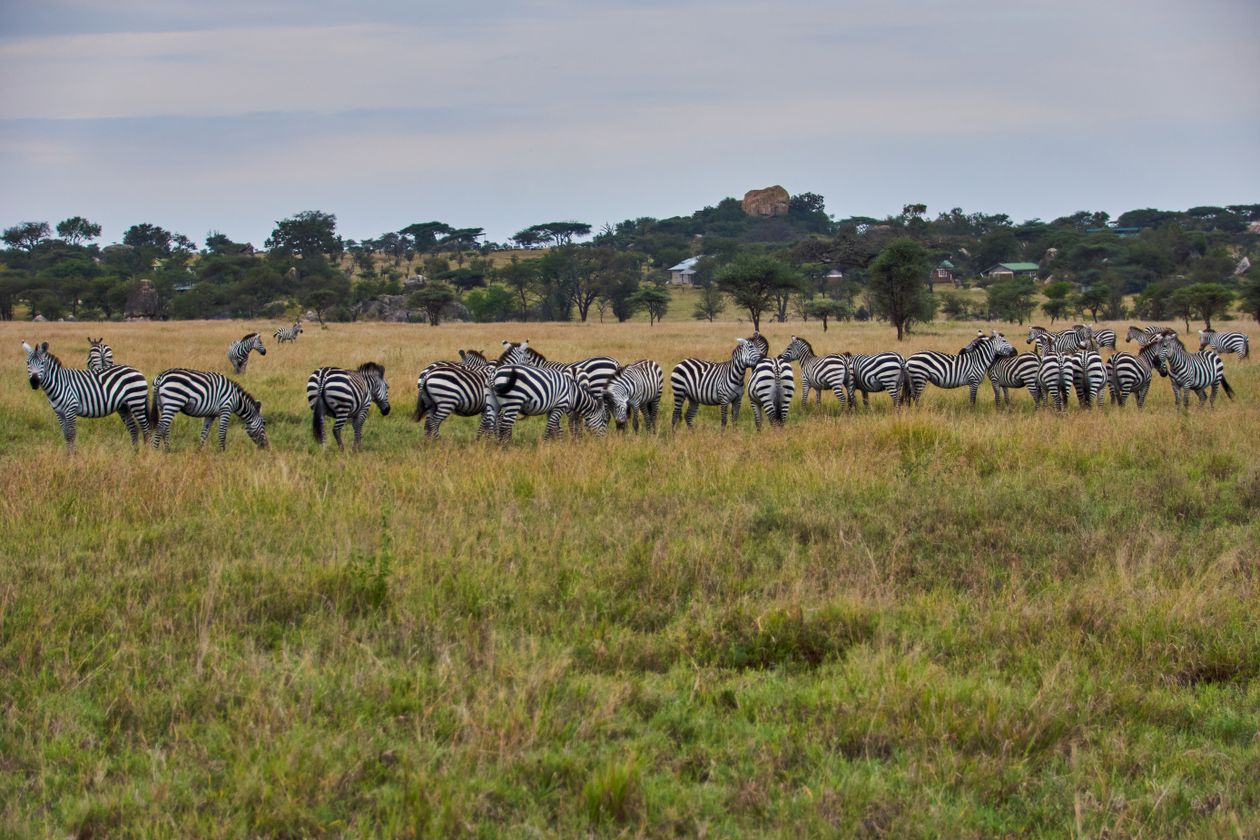
If you are planning a Tanzania safari and trying to decide between the Serengeti and Ngorongoro Crater, the honest answer is that most people do both. But if you are short on time, or working out how to split your days, the two parks feel quite different and each one does certain things better than the other.
The Serengeti is vast and wild, with an open quality that makes it feel like the Africa you imagined. Ngorongoro is compact and concentrated, almost overwhelming in how much wildlife you can see in a single drive. Here is a side-by-side look at both so you can figure out what suits your trip.
| Serengeti | Ngorongoro Crater | |
|---|---|---|
| Size | ~15,000 km² | Crater floor: ~260 km² |
| Best for | Great Migration, big cats, open plains | Big Five in one day, black rhinos, crater scenery |
| Entrance fee | $70 per adult per day | $71 per adult per day + $295 per vehicle crater fee |
| Rhinos | Rare (northern Lobo area only) | 26+ black rhinos, regularly seen |
| Recommended days | 3 to 4 minimum | 1 to 2 |
| Best season | Year-round; June to October for migration | Year-round; June to October for dry season |
The Serengeti: Open Plains and the Great Migration
The Serengeti covers roughly 15,000 square kilometres and stretches from the short-grass plains of the south to riverine forest and rocky kopjes in the north. The name comes from the Maasai word for "endless plains", and once you arrive you understand why. The landscape shifts as you move through the park, from open golden savannah in the central and southern areas to woodland and granite outcrops around Seronera, and then to the lush northern corridor near the Mara River.
The Great Migration is what many visitors come for. Each year roughly two million wildebeest, along with hundreds of thousands of zebras and gazelles, make a circular journey across the Serengeti ecosystem in search of fresh grazing. Between June and October the herds move northward and gather near the Mara River, where dramatic crossings attract safari visitors from across the world. In January and February the calving season plays out on the southern plains, with predators following close behind. There is no wrong month to visit, but if river crossings are a priority, July to September is when they are most frequent.
Beyond the migration, the Serengeti holds around 4,000 lions and is an excellent park for leopards near the Seronera River, where they are accustomed to vehicles and often rest in acacia trees. Cheetahs are regularly spotted on the open plains, particularly in the Ndutu and central areas. If watching big cats is high on your list, the Serengeti is the stronger of the two parks for this.
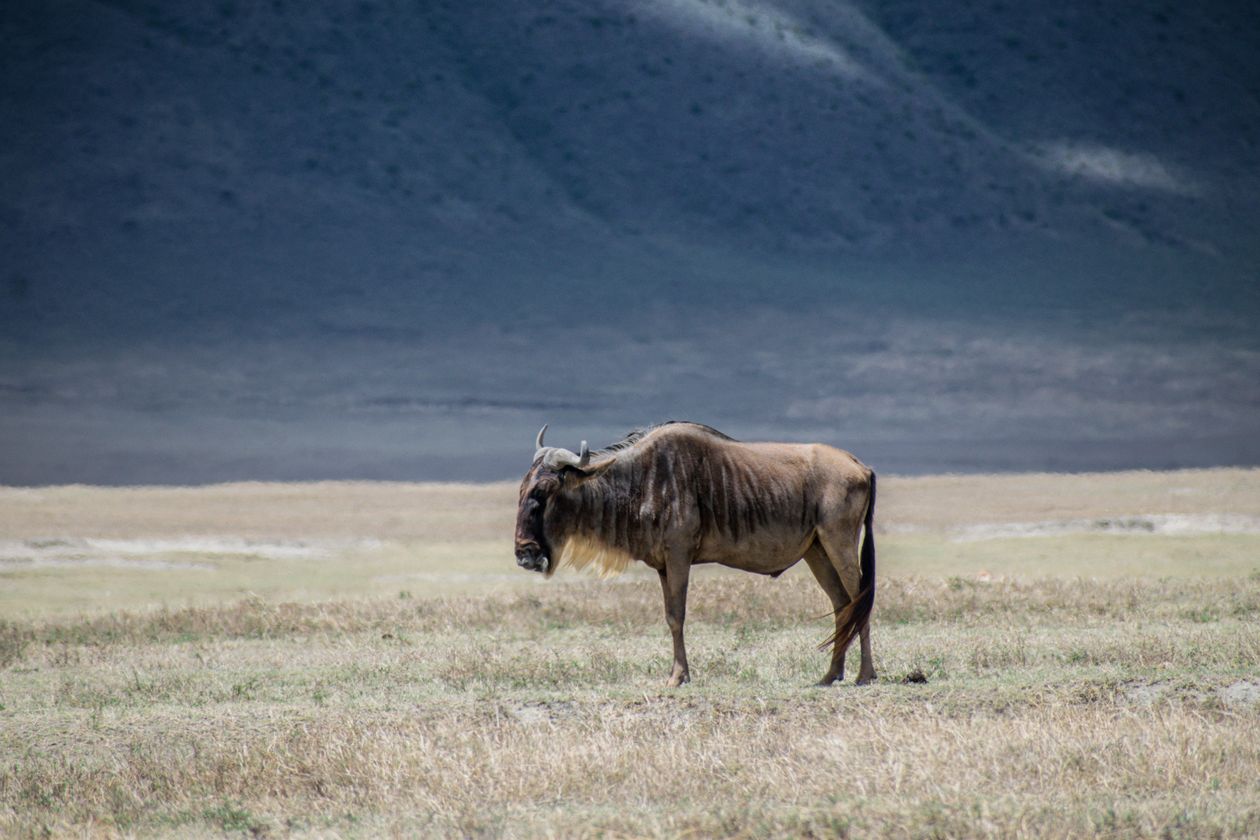
Ngorongoro Crater: Wildlife in a Natural Bowl
Ngorongoro Crater is the world's largest intact volcanic caldera, measuring about 19 kilometres across and sitting at roughly 2,400 metres above sea level on the rim. It formed around 2.5 million years ago when a massive volcano collapsed inward, leaving the vast, unbroken bowl that exists today. The walls of the caldera act as a natural enclosure, keeping wildlife and fresh grass in remarkable concentration on the floor below.
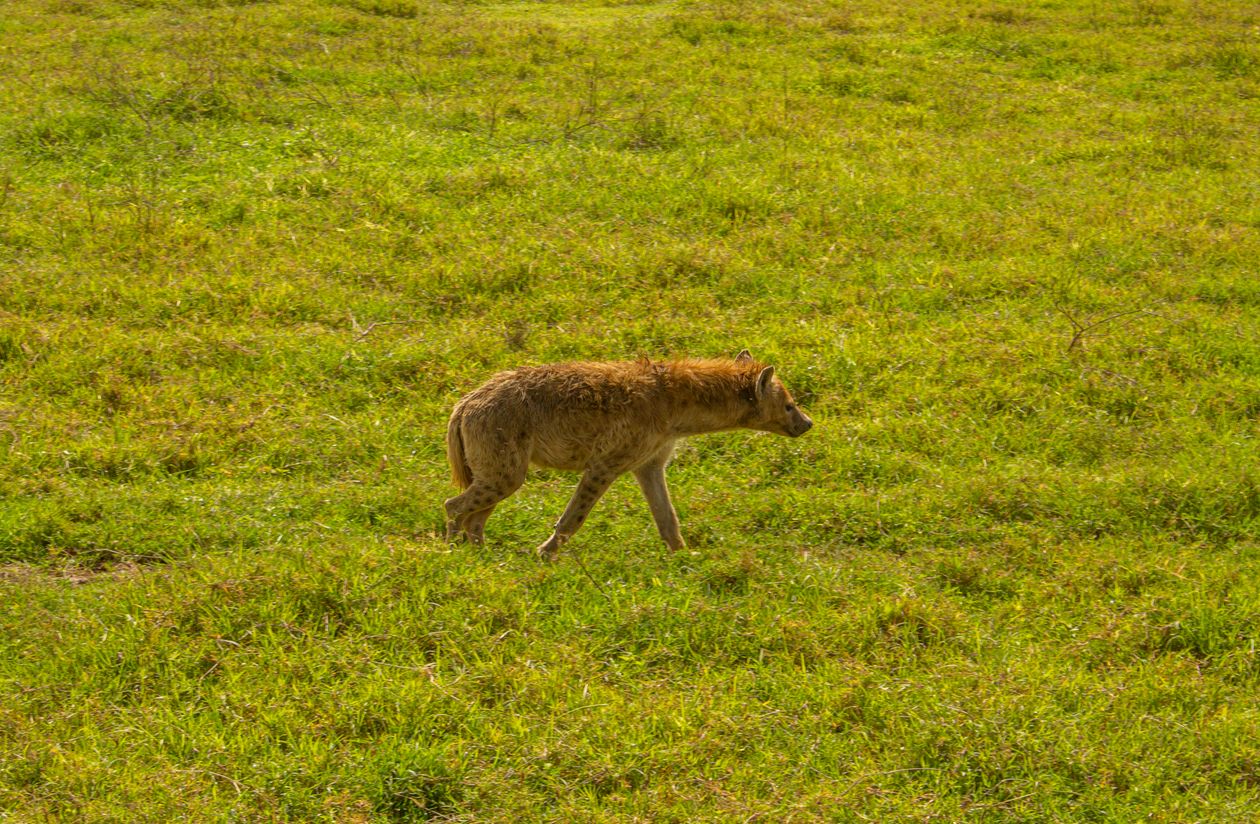
Around 25,000 large animals live on the crater floor at any one time. A full-day game drive can realistically include lions, elephants, hippos at the Mandusi Swamp, zebras, wildebeest, hyenas, and flamingos at Lake Magadi. The crater is also one of Africa's most consistent places to see a black rhino in the wild. Around 26 black rhinos live on the floor, descended from a carefully protected population. Sightings are not guaranteed on every visit, but the odds here are far better than almost anywhere else in Tanzania.
There are some practical points worth knowing before you go. You cannot sleep on the crater floor; all lodges sit on the rim, and you descend in the morning and ascend by the afternoon cutoff. The crater attracts significant visitor numbers between July and October, and popular sightings can draw multiple vehicles. Going early and being willing to move away from crowds during peak hours tends to give you a better experience overall.
How the Wildlife Compares
Both parks hold the Big Five, but how reliably you see each animal differs considerably. Lions, elephants, and buffalo are consistent in both. Hippos are particularly accessible at Ngorongoro's Mandusi Swamp, while elephants in the Serengeti tend to appear in smaller groups than the large breeding herds you find further south in Tarangire.
Black rhinos are where Ngorongoro clearly leads. The Serengeti has a small rhino population in the far northern Lobo area, but sightings there are genuinely uncommon. The 26 or so rhinos that live in the crater make Ngorongoro one of the most consistent places on the continent to see this animal, and for many visitors a rhino sighting becomes the most talked-about moment of their whole trip.
For leopards and cheetahs, the Serengeti is the better option by some distance. Leopard sightings in the Seronera Valley happen near-daily, and cheetahs are regularly found across the central and southern plains. The crater has very few leopards as the habitat does not suit them, and cheetahs appear occasionally but are not reliable. If either animal is a priority for you, factor this into how you split your days.
Costs: What Each Park Will Set You Back
Entrance fees for the two parks are almost identical. The Serengeti charges $70 per adult per day for foreign non-residents, plus 18% VAT. Ngorongoro Conservation Area charges $71 per adult per day. In most cases both fees are bundled into a tour package rather than paid separately at the gate, but understanding them helps when you are comparing quotes from different operators.
The meaningful cost difference at Ngorongoro is the crater descent fee: $295 per vehicle per day on the crater floor. This applies every day you go down and is paid on top of the conservation area entrance fee. For a group of four or five people sharing a vehicle the per-person addition is manageable, but for a couple in a dedicated vehicle it pushes the daily cost noticeably higher. It is worth factoring this in when deciding how many crater days to build into your itinerary.
Which Should You Choose?
The decision is simpler than it can feel when you are deep in planning. If the Great Migration is your main reason for coming to Tanzania, or if you want long open game drives and reliable big cat sightings, the Serengeti deserves the bigger share of your days. It is the kind of park that rewards time, and three days there will feel very different from one overnight.
Ngorongoro is the stronger option if you want concentrated wildlife in a short window, or if seeing a black rhino matters to you. It also suits travellers who are combining a short safari with a beach stay at Zanzibar and need an efficient, high-yield day in the field. One full day in the crater, starting early, gives you a tremendous amount.
For first-time visitors especially, doing both parks gives you a much fuller picture of what Tanzania's northern circuit has to offer. The contrast between the Serengeti's open scale and the crater's bowl-shaped intensity is actually a large part of what makes the combination work so well.
Why Most Itineraries Include Both
The Serengeti and Ngorongoro sit within about 100 kilometres of each other on the northern safari circuit, which makes combining them straightforward. Most multi-day safaris also include Tarangire National Park near the start, which is particularly worth visiting for its large elephant herds and ancient baobab trees, and sometimes Lake Manyara as well. The typical loop runs from Arusha to Tarangire, north through the Serengeti, and then finishes with the crater descent at Ngorongoro before returning to Arusha.
A common and well-balanced structure is three nights in the Serengeti followed by one full day at the crater. This gives you enough time in the Serengeti to explore different areas of the park and settle into the rhythm of early-morning drives, while still making full use of what Ngorongoro offers. If you would like a detailed walkthrough of how this route works in practice, our 6-day Tanzania safari itinerary covers the parks, pacing, and practical logistics in full.
Final Thoughts
Both parks deserve their reputations. The Serengeti gives you scale, the Great Migration, and the kind of open-plain wildlife experience that stays with you long after the trip. Ngorongoro gives you the most concentrated Big Five viewing in Tanzania, genuine black rhino sightings, and a caldera landscape that feels like nothing else in East Africa.
Most people who see both say the contrast between them is part of what makes a northern circuit safari so satisfying. If you are still working out how many days to give each park, or whether to add Tarangire into the mix, talking to someone who knows the circuit well can save you a lot of back-and-forth research.
Frequently Asked Questions
Can you visit both the Serengeti and Ngorongoro on the same safari?
Yes, and most visitors do. The two parks sit close to each other on the northern Tanzania circuit and are easily combined in a 5 to 7 day itinerary. A typical arrangement puts 2 to 3 nights in the Serengeti followed by a full day at the Ngorongoro Crater before returning to Arusha.
Which park is better for seeing the Great Migration?
Only the Serengeti. The Great Migration takes place across the broader Serengeti ecosystem, and the famous Mara River crossings happen in the northern Serengeti between July and September. The Ngorongoro Crater does not host the migration on its floor, though the wider Conservation Area sees wildebeest passing through during the wetter months.
Is one day at Ngorongoro worth it?
Yes. Many visitors spend a single full day on the crater floor and find it one of the most rewarding days of their safari. The key is to arrive at the rim early, descend at opening time, and make the most of the cooler morning hours when animals are most active. One day is enough to see a great deal.
Which park is better for seeing a black rhino?
Ngorongoro, by a clear margin. Around 26 black rhinos live on the crater floor, and sightings are reasonably regular. The Serengeti has a very small rhino population in its northern Lobo area, but encounters there are uncommon. If rhino is a priority for you, build in a crater day and ask your guide to look for them specifically.
Do you need a guide to visit either park?
Yes, for both. Foreign visitors cannot self-drive in the Serengeti or the Ngorongoro Conservation Area. You will need a licensed guide, which in practice means visiting as part of a package arranged through a licensed Tanzanian tour operator. This is standard across all of Tanzania's northern circuit parks.
Which park costs more to visit?
The entrance fees are nearly identical, around $70 to $71 per adult per day. Ngorongoro adds a crater descent fee of $295 per vehicle per day, which can make a crater day more expensive depending on how many people share the vehicle. The Serengeti tends to work out less costly per day for smaller groups or couples travelling together.