
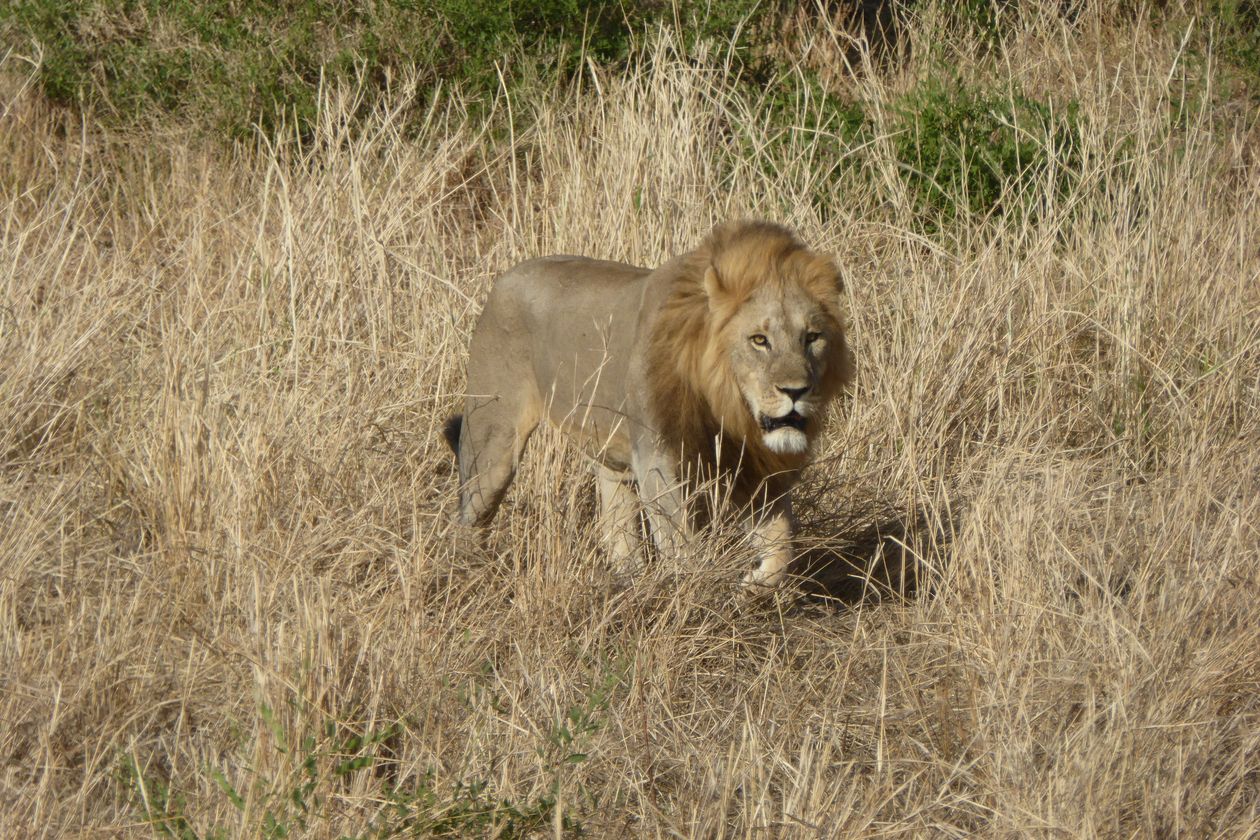
The Big Five in Tanzania (lion, leopard, elephant, Cape buffalo, and black rhino) are all present in the northern safari circuit, and a well-planned trip gives you a realistic shot at all five. Each animal has a clear frontrunner park: the Serengeti's Seronera Valley for lions and leopards, Tarangire National Park for dry-season elephant herds, and Ngorongoro Crater for Cape buffalo, rhino, and the strongest chance of seeing all five in a single day. The dry season from June to October is when sightings peak across the board, though lions and elephants are reliably visible year-round.
| Animal | Best Park | Best Season | Difficulty |
|---|---|---|---|
| Lion | Serengeti (Seronera Valley) | Year-round | Easy |
| Leopard | Serengeti (Seronera Valley) | Year-round | Moderate |
| Elephant | Tarangire NP | June to October | Easy |
| Cape Buffalo | Ngorongoro Crater | Year-round | Easy to moderate |
| Black Rhino | Ngorongoro Crater | Year-round | Difficult |
Lions in Tanzania: Your Best Chance Is in the Serengeti
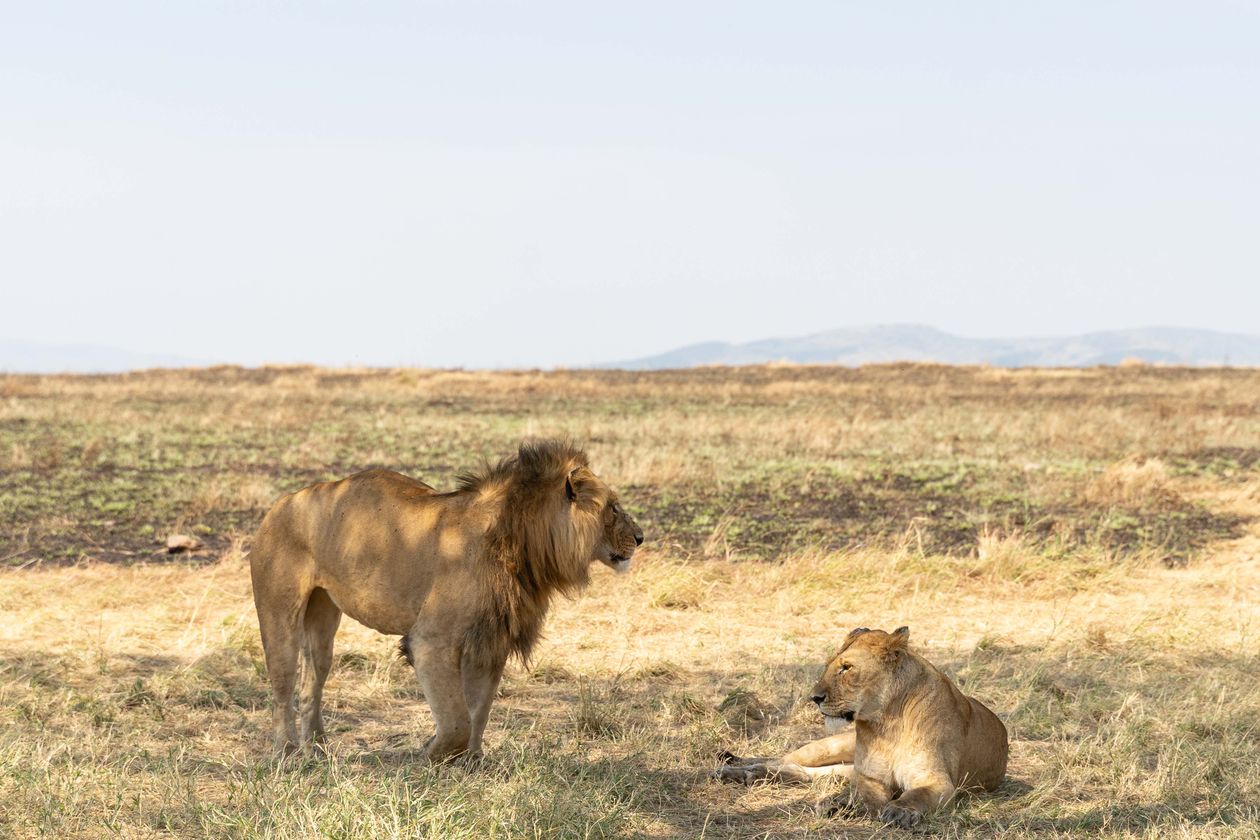
Tanzania holds one of the largest lion populations on Earth, estimated at 3,000 to 4,000 individuals in the Serengeti ecosystem, more than any other single wildlife area in Africa. The Seronera Valley in central Serengeti is the most reliably productive spot on the northern circuit: resident prides hunt the valley floor year-round, and it's common to see multiple prides in a single morning. The valley's rocky kopjes (granite outcrops) are favorite resting places for lions avoiding the midday heat, and the Seronera River concentrates prey animals, keeping the cats close throughout the year.
Ngorongoro Crater also holds a dense lion population on its 304-square-kilometer floor, and because animals can't leave, sightings are nearly guaranteed on a full crater day. Tarangire has good lion sightings too, particularly along the Tarangire River in the dry season when prey concentrates. For sheer numbers and predictability, though, the Serengeti is the address.
When to go: Lions are visible year-round in Seronera. The dry season from June to October gives the clearest sightlines as grass stays short, but January and February bring lions into intense hunting activity near Ndutu and the southern plains during the calving season. Some of the most dramatic predator action of the year happens in those two months.
Tip: Get onto the kopje roads in the first hour after the park gates open. Lions patrol before the heat builds, and you'll find them moving rather than sleeping. Look for vultures circling or gathering in trees; they nearly always mark a kill or carcass, and lions are usually nearby.
Leopards in Tanzania: Patience Pays Off in the Seronera Valley
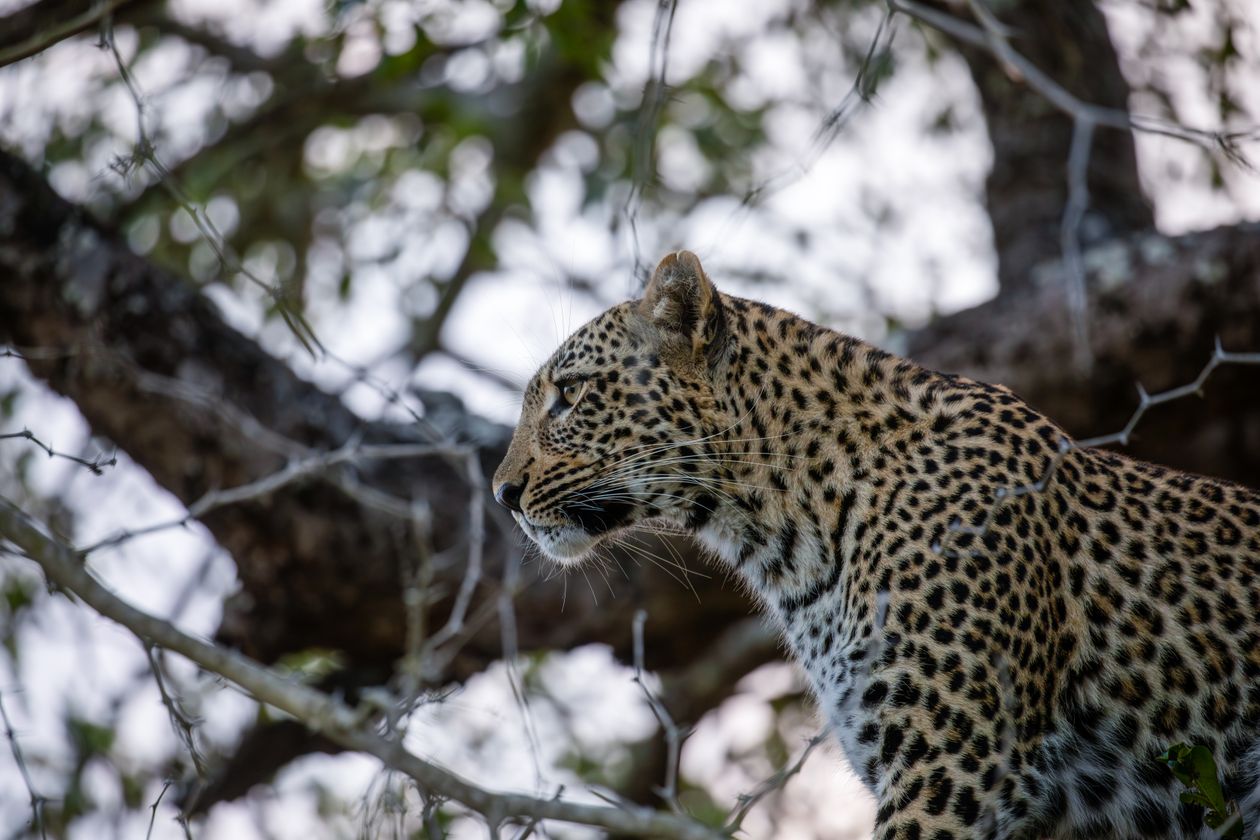
Leopards are the most difficult of the big cats to find, but the Seronera Valley gives you the best odds in Tanzania and possibly all of East Africa. The valley's Kigelia (sausage) trees and acacia woodland along the Seronera River are exactly the habitat leopards favor for dragging kills into branches and resting out of sight. Guides who work the area describe it as the most consistently productive leopard zone they know, and on a full day in Seronera, a leopard sighting is the norm rather than the exception.
Ngorongoro Crater's Lerai Forest is the second-best option: a grove of yellow fever trees at the crater's southern end where leopards move at dawn before retreating into heavier cover as the morning heats up. Guides who reach the crater floor by 6 AM tend to head there first, before the leopards go still for the day.
When to go: Year-round, but the dry season thins out the tree canopy and makes kills hanging in branches more visible. The productive window is early morning, roughly 6 to 9 AM. After 10 AM, leopards tend to go completely still in whatever tree they've chosen and become nearly impossible to spot even when your guide already knows the tree.
Tip: Train your eyes upward rather than scanning the ground. A resting leopard in a tree will often show nothing but a hanging tail or a dangling leg. Ask your guide to slow down in riverine woodland and sit at a promising spot for a while. Patience in one location consistently outperforms covering ground hoping to stumble on a sighting.
Elephants in Tanzania: Tarangire Is in a Class of Its Own
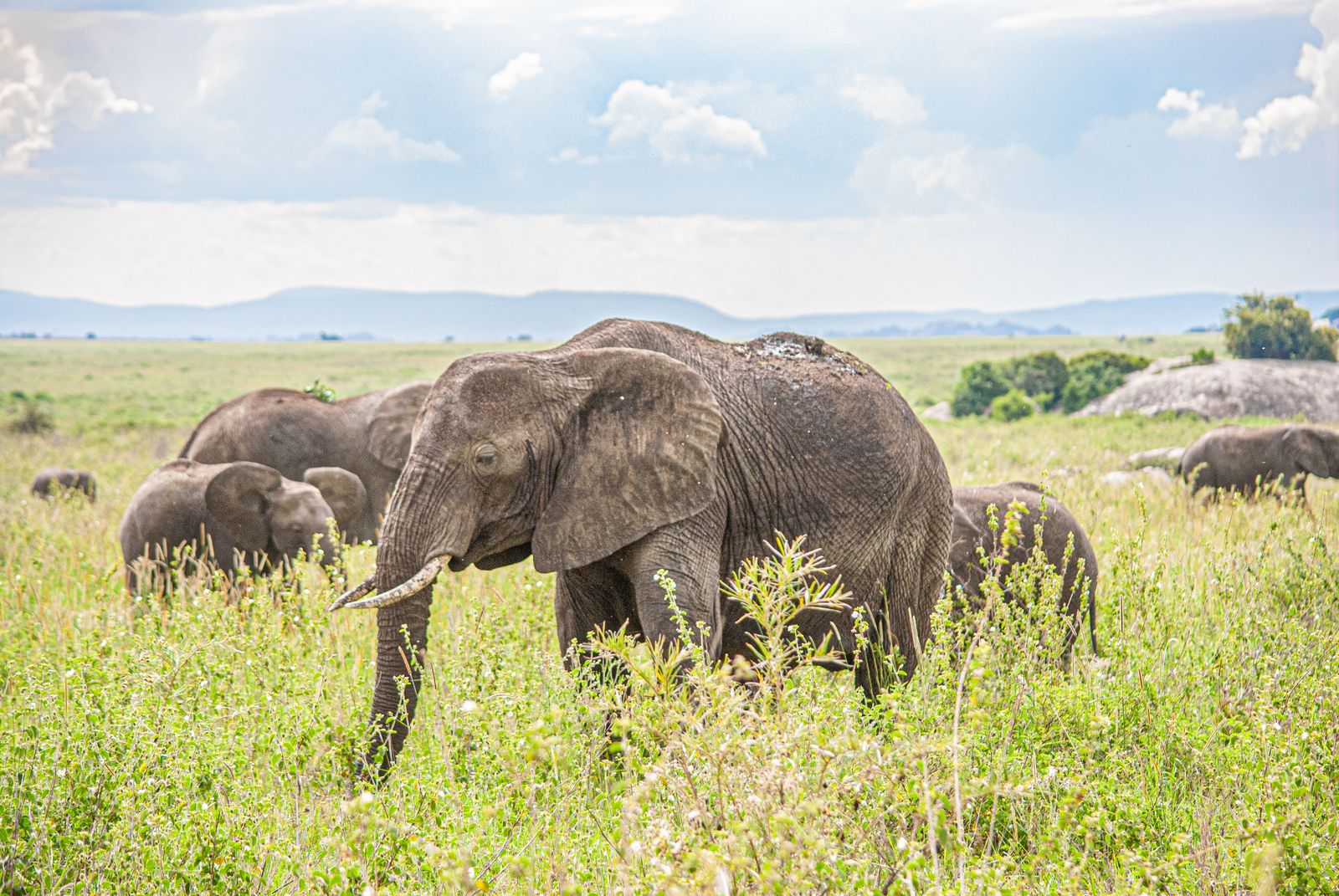
Tanzania's elephant population is healthy across the northern circuit, but Tarangire National Park during the dry season is in a different league. The park holds over 4,000 resident elephants, and between June and October, as water sources outside the park dry up, herds from across the wider ecosystem funnel back to the Tarangire River. Groups of 200 to 300 elephants, gathering at the riverbed and digging for underground water with their feet and trunks, are a normal dry-season sight here, not an exceptional one. For more on timing and logistics, see our full Tarangire National Park guide.
The park's ancient baobab trees add scale to these encounters. Some specimens are 500 to 900 years old, and watching a herd of elephants move between trees that predate any European knowledge of East Africa puts the scale of these animals in a different perspective. It's something the Serengeti's open plains don't replicate.
Ngorongoro Crater holds around 1,000 elephants on its floor at any given time, concentrated within a 304-square-kilometer bowl. The Serengeti has elephants throughout as well, particularly in the north around Lobo and the center near Seronera, though herds are smaller and more spread out than what you'll find in Tarangire during peak season.
When to go: June to October in Tarangire, when herds peak and the dry vegetation gives open sightlines across the riverbed. Outside this window, many elephants disperse into the broader Tarangire-Manyara ecosystem and sightings become more scattered, though still possible year-round.
Cape Buffalo in Tanzania: Dense Herds in Ngorongoro and the Serengeti
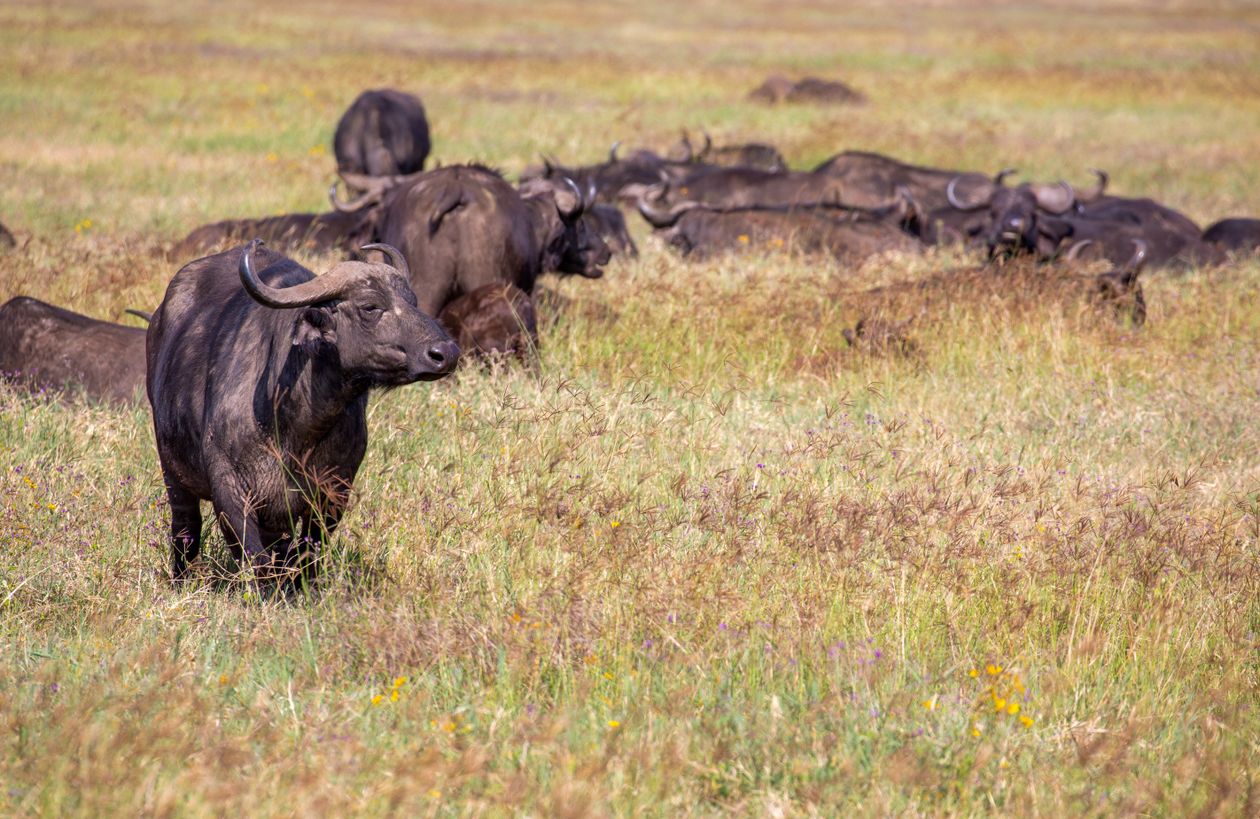
Cape buffalo are the most straightforward of the Big Five to find anywhere on the northern circuit. Ngorongoro Crater holds around 2,000 buffalo on its enclosed floor: that density, combined with no way out, makes them almost unavoidable on a full crater day. Herds typically number 50 to 200 animals and you'll often see them grazing on the central short-grass plains or wallowing at the hippo pool near the Munge River. The scale of buffalo herds inside the crater, moving as a dark mass across the open grass, is something that doesn't fully register until you're in it.
The Serengeti has an estimated 20,000 to 30,000 buffalo spread across the park, one of the largest populations in Africa. Large herds are common throughout the central and northern Serengeti year-round, with the biggest aggregations forming near permanent water in the dry season. One thing worth knowing: where there are large buffalo herds, lions are rarely far away. A buffalo sighting, especially if the herd seems agitated or bunched, is often worth sitting on for a while.
When to go: Year-round in Ngorongoro, where the enclosed caldera keeps buffalo numbers consistent regardless of season. In the Serengeti, the dry season from June to October produces the largest concentrations near water sources and gives the clearest views across open ground.
Black Rhino in Tanzania: Rare, Protected, and Worth the Effort
Black rhino is the hardest of the Big Five to see in Tanzania, and a sighting is genuinely not guaranteed on any given day. Ngorongoro Crater is the only place on the northern circuit where you have a realistic chance: the crater holds approximately 30 black rhinos, the largest single wild population in the country and one of the few remaining in East Africa. They move across the entire crater floor but are most often spotted in open grassland near the Lerai Forest and on the central plains.
The history of these animals matters. In the 1960s, Ngorongoro held more than 100 black rhinos. Relentless poaching through the 1970s and 1980s reduced the population to fewer than 20 individuals. What exists today reflects decades of 24/7 armed anti-poaching patrols and a conservation partnership between the Ngorongoro Conservation Area Authority, Tanzania National Parks, and the Frankfurt Zoological Society. The population is slowly recovering, which makes it a genuine success story, though the numbers remain fragile. You can read more about the crater's wildlife and logistics in our Ngorongoro Crater safari guide.
What to expect: Most visitors who see a rhino spot it from 300 to 500 meters away: a dark, distinctive silhouette moving across the grass, with the curved horn visible through binoculars. Close encounters are uncommon and worth being genuinely grateful for. Guides stay networked by radio, so if another vehicle spots a rhino, the information travels quickly and your guide can adjust the route.
Tip: Arrive at the Ngorongoro Crater rim as the gates open and descend to the floor quickly, heading toward the Lerai Forest and central plains before the heat builds. Rhinos are most active in the early morning and late afternoon. Binoculars rated 8x42 or 10x42 are not optional here: you will almost certainly need them to confirm what you're looking at across the open floor.
Which Park Gives You the Best Shot at All Five?
Ngorongoro Crater is the only place in Tanzania where seeing all Big Five animals in a single day is genuinely within reach, and experienced guides have done it. The combination of roughly 25,000 large mammals on a 304-square-kilometer floor, animals having no way to leave, and the variety of habitats inside the caldera (open grassland, the hippo pool, Lerai Forest, acacia scrub) means each species occupies a distinct zone you can work through systematically on a full day's drive.
The Serengeti delivers more for lions and leopards than the crater does, and Tarangire's elephant experience has no peer during the dry season. The most effective strategy for a Tanzania Big Five trip is two to three nights in the Serengeti's central zone for big cats, one to two nights in Tarangire for elephants, and one full day on the Ngorongoro Crater floor plus an overnight on the rim. A 6 to 8 day Tanzania safari itinerary gives you enough time to cover all three properly without rushing any of them.
Best Time for a Big Five Tanzania Safari
The dry season from June to October is the strongest window for seeing the Big Five in Tanzania. Short grass means you see farther across the plains, animals concentrate around the remaining permanent water, and kills are more visible in the thinning tree canopy. This is also when Tarangire's elephant aggregations peak: July through September is particularly strong for that park.
January and February offer a different kind of intensity. The Great Migration calving season concentrates hundreds of thousands of wildebeest on the southern Serengeti plains near Ndutu, drawing lions and cheetahs into near-constant hunting activity. Rhino and leopard sightings don't improve in this window, but lion action can be as dramatic as anything you'll see during the dry season.
The long rains from March to May bring thick vegetation and some road challenges across the northern circuit, which genuinely makes wildlife harder to spot. You'll spend more time peering into green walls rather than open sightlines. For a Big Five focus, the dry season is the reliable choice, and our month-by-month Tanzania safari guide covers how each season plays out for every activity in more detail.
Tips for Spotting the Big Five on a Tanzania Safari
The single biggest factor in Big Five sighting success is your guide's experience in the specific park you're in. A guide who has worked the Seronera Valley for years knows which pride uses which kopje, which trees leopards favor at different times of year, and which radio contacts to call when a rhino or hunting cat is reported. When specific animals are the goal, especially leopard and rhino, tell your guide upfront so the morning routing targets those sightings while the light and animal activity are at their best.
A few practical things make a consistent difference. Arrive at park gates as early as they open, typically 6 AM. The two-hour window around dawn is when predators are most active, buffalo herds are moving, and the light is cleanest for photography. Bring binoculars rated 8x42 or 10x42: they're essential for rhino identification, useful for deciding whether a distant dark shape is a buffalo or a rock, and they improve every sighting. Pack layers for the crater specifically; the rim sits at 2,300 meters and mornings are cold before the descent to the 1,800-meter floor.
Don't rush. On a short trip, the temptation is to cover as much ground as possible, but the sightings that stay with you tend to come from sitting with something that's unfolding: a pride working through the last of a night's kill, a leopard scanning the riverbank from its branch, a rhino grazing slowly across the open plain. An hour at one sighting is almost always more rewarding than an hour of driving and hoping.
Frequently Asked Questions: Big Five in Tanzania
These are the questions travelers ask most often when planning a Tanzania safari focused on the Big Five.
Can you see all the Big Five in Tanzania?
Yes, all five are present in the northern circuit. Ngorongoro Crater is the most realistic place to see all five in a single day. The main caveat is the black rhino: with only about 30 individuals on the crater floor, a sighting is possible but not guaranteed. Give yourself more than one crater day if seeing a rhino is a priority.
What is the best park for Big Five in Tanzania?
Ngorongoro Crater is the best single park for seeing all five, thanks to the enclosed caldera keeping roughly 25,000 large mammals in a compact area. For lions and leopards specifically, the Seronera Valley in the central Serengeti is the most consistently productive location in East Africa. No single park gives you the full Big Five experience at its best, but the combination of Serengeti, Tarangire, and Ngorongoro covers every animal in its strongest setting.
Is the black rhino the hardest of the Big Five to see in Tanzania?
Yes, by a significant margin. Tanzania's entire wild black rhino population on the northern circuit is concentrated in Ngorongoro Crater at roughly 30 individuals. Sightings happen regularly; guides stay networked by radio. But they're almost always at a distance with binoculars, and a close encounter is uncommon and worth being genuinely grateful for if it happens.
How long do you need for a Big Five safari in Tanzania?
Six to eight days is the minimum for a realistic shot at all five. That gives you two to three nights in the Serengeti's central zone for big cats, one to two nights in Tarangire for elephants, and one full day plus a rim overnight in Ngorongoro for rhino and buffalo. Fewer days means cutting one park, which usually means giving up your best chance at either elephants or rhino.
Is Tarangire worth including on a Big Five Tanzania trip?
Yes, specifically for elephants. Tarangire holds over 4,000 elephants and in the dry season from June to October, herds of 200 to 300 animals gather along the Tarangire River in numbers that are unmatched anywhere in northern Tanzania. The park also has lions and leopards, but the elephant experience is the reason to include it on any Big Five itinerary.
What is the best time of year for a Big Five safari in Tanzania?
June to October is the strongest across all five animals: short grass, animals concentrated at water sources, and peak Tarangire elephant herds. January and February are excellent for lion action during the calving season on the southern Serengeti plains. The March to May long rains make sightings harder and roads wetter, so they're worth avoiding if seeing the Big Five is the primary goal.
Do you need to visit multiple parks to see the Big Five in Tanzania?
Not technically; Ngorongoro Crater holds all five. In practice, combining Serengeti, Tarangire, and Ngorongoro gives you each animal in its best setting: lions and leopards in the Seronera Valley, elephants in Tarangire's dry-season aggregations, and buffalo and rhino in the crater. A crater-only itinerary will tick the boxes, but a multi-park circuit gives you a significantly richer experience of each species.